 When Anthropic launched Claude Science on June 30, 2026, the announcement quickly became one of the most active AI-for-science discussions on Hacker News. A Hacker News thread titled “Claude Science” shows 560+ points and 174 comments, reflecting how strongly the launch resonated with researchers and AI builders. The product brings together 60+ curated skills and connectors for genomics, single-cell analysis, proteomics, structural biology, cheminformatics, and related workflows, with a coordinating agent that can hand tasks to specialist agents. TechCrunch captured the pitch precisely: Claude Science is “not a new AI model and not a more capable model for biology.”
That framing is the most important sentence in the entire announcement. It tells you where the real competition in biomedical AI research workflow tools is actually happening.
A post-launch breakdown from Run Data Run, “Claude Science and the boring 80 percent,” makes a similar point: Claude Science is a workbench, not a miracle. The model is the commodity layer; the harness around it is the moat. The post argues that the tool is aimed at the tractable, tedious layer of scientific work: literature synthesis, pipeline glue, figure iteration, compute coordination, and the job-script / cluster-workflow overhead that surrounds actual scientific decisions.
That observation reframes the entire debate. The question isn't "how smart is the model?" It's: "does this tool understand what a researcher actually spends their time doing?" Most don't. And that gap is the central challenge in building AI tools that research teams will trust at scale.
Why Research Infrastructure Is the Actual Product
Researchers face a compounding infrastructure burden that doesn't show up in model capability comparisons. Biomedical data is large, heterogeneous, sensitive, and often spread across tools that were never designed to work together. Multi-step analyses — preprocessing raw genomics reads, integrating multi-omics datasets, running cohort comparisons — require decisions at every stage that determine the validity of everything downstream. The code automating those steps needs to be not just correct, but traceable, reproducible, and transferable across lab members and machines.
An AI workbench that handles this layer well isn't doing less important work than one that generates hypotheses. It's doing the work that makes everything after it trustworthy. Setup, provenance, reproducibility — these aren't support functions. They are the product.
Where Workflow Structure Matters Most
Single-cell RNA-seq preprocessing. Quality filtering thresholds, normalization choices, and dimensionality reduction parameters all shape downstream conclusions. Wrong decisions at this stage propagate invisibly. Structured, versioned workflow components — with logged parameters at each step — give reviewers and collaborators a clear audit trail without requiring them to reconstruct the pipeline from scratch.
Multi-omics integration. Combining transcriptomic, proteomic, and genomic datasets requires consistent normalization across modalities, with domain-specific transformation at each step. Researchers navigating this know the complexity isn't in any individual analysis — it's in the coordination. AI tools that understand the sequence of steps are structurally different from general-purpose assistants that know how to write individual functions.
Systematic literature-to-analysis pipelines. From search to evidence extraction to structured synthesis, the path between literature and data requires traceable, repeatable execution to be scientifically credible.
Cohort replication studies. Reproducing a published analysis on a new cohort requires reconstructing exactly what the original analysis did. Ad-hoc scripts make this nearly impossible. Structured workflows with provenance tracking make it routine.
Conclusion
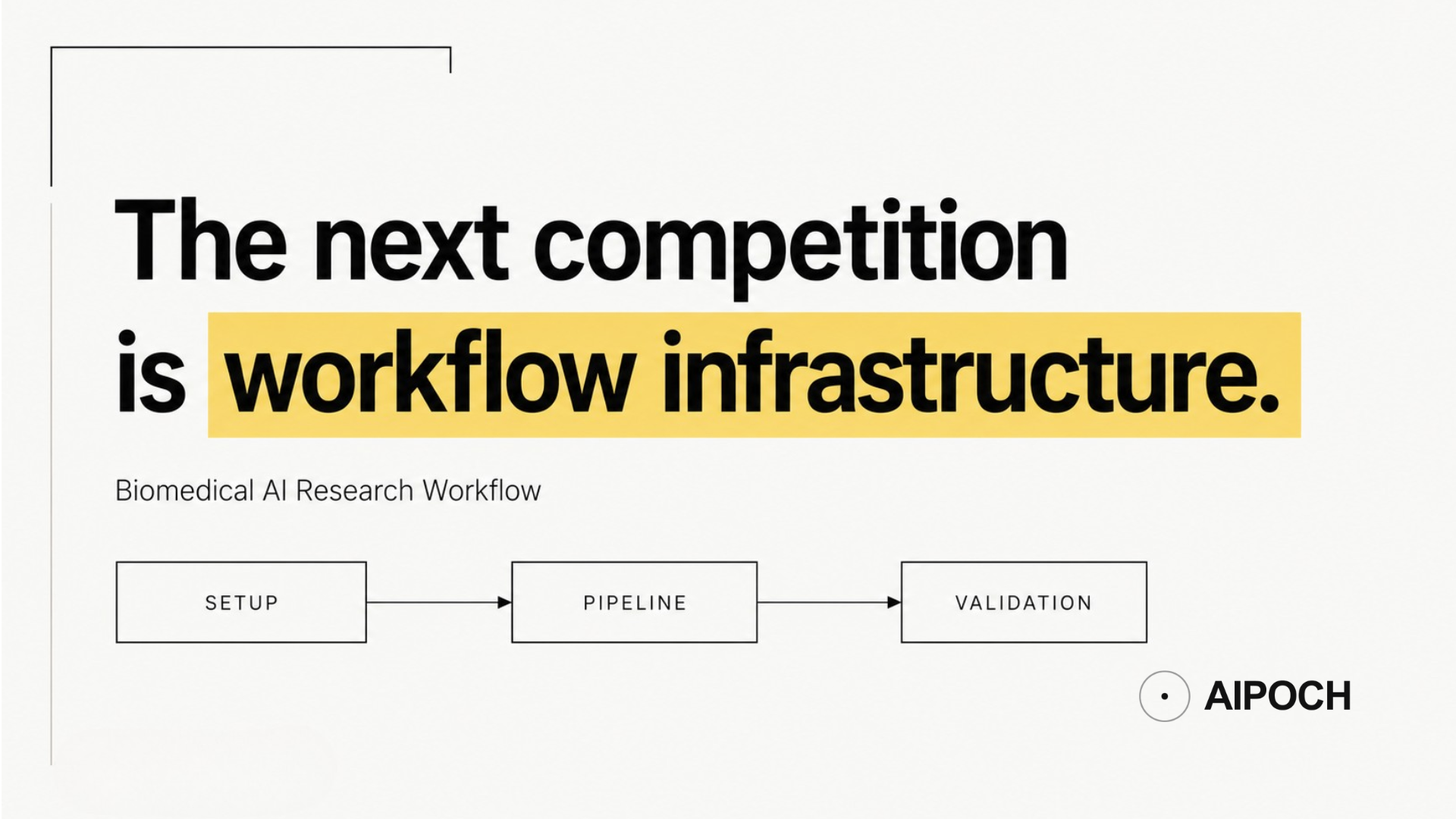
The Claude Science launch crystallized something the research community has been feeling for months: the AI tool competition for scientists will not be won only by the most capable model. It will be won by the tool that best handles the infrastructure layer — the setup, coordination, and provenance work that makes analysis reproducible, auditable, and safe to build on.
That requires a different design philosophy. Not "how can we make the model smarter?" but "how can we give researchers a workflow layer they can actually trust?" Structured, validated workflow components. Local execution for IP protection. Provenance at every step. Agent coordination that mirrors how expert researchers break down complex problems.
The gap between where research AI tools are and where they need to be is closing. But it's closing on workflow infrastructure, not model capability rankings. Researchers who understand this distinction are already asking the right questions about the tools they adopt.
About AIPOCH
The silent error problem is exactly what AIPOCH is working to solve. AI made biomedical analysis faster. It didn't make results more trustworthy — and the gap between "getting started" and "getting it right" hasn't been seriously closed. AIPOCH's answer isn't to make AI better at guessing. It's to encode expert knowledge and validated workflow logic into structured, reusable units that AI can draw on directly — so analysis runs from a verified foundation rather than an open field of assumptions.
That work is visible in the AIPOCH agent skill library: hundreds of agent skills covering protocol design, data analysis, evidence insights, and academic writing.
For a deeper look at how the AI workbench shift is reshaping what researchers actually need from their tools, read AIPOCH's blog.
Disclaimer
This article is intended for informational purposes only and does not constitute medical advice or clinical guidance.