A Problem That Has Been Overlooked for Too Long
The most frustrating errors in medical research data analysis aren't the ones that crash your code, at least those tell you something went wrong. The most frustrating errors are the ones that let your code finish cleanly, produce results that look reasonable, and only reveal themselves weeks or months later, quietly, in a place you didn't expect to look. This risk has been chronically underestimated because it's genuinely hard to detect.
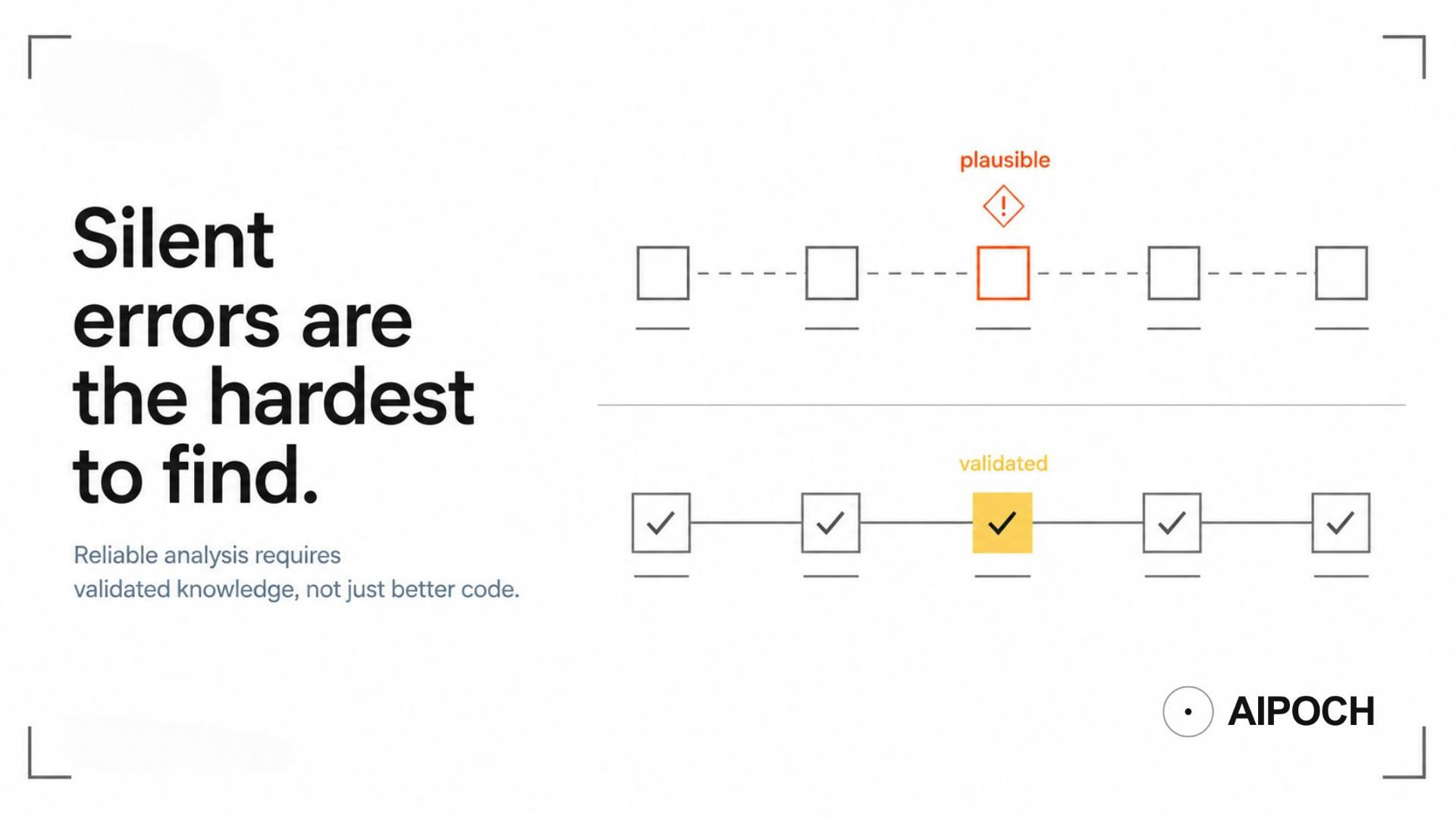
AI Made Analysis Faster. It Didn't Make Results More Trustworthy.
We don't dismiss what AI has brought to research. It has genuinely lowered barriers and helped more people get started.
But there is a gap between "getting started" and "getting it right", and no one has seriously closed it.
AI-generated code will run. The figures will appear. But you won't know that somewhere in the middle, it quietly chose a normalization method that didn't fit your data. By the time you find out, weeks will have passed.
This is a structural risk that comes with asking AI to generate analysis code from scratch.
And this isn't just our observation — it's what researchers in the field are saying themselves. A thread on Reddit's r/bioinformatics asked exactly this question: where do AI coding agents go wrong in bioinformatics? The most upvoted answers converge on the same point: it's not that the code breaks. It's that you don't know what assumptions it quietly made. Read the thread →
Medical research data analysis doesn't just need AI that can generate code. It needs AI that operates on a foundation of validated, expert-verified knowledge.
What AIPOCH Is Building
What AIPOCH is working on is concrete: giving researchers a more reliable foundation at every step of their analysis, so that errors are caught upstream rather than discovered after the fact.
We believe the way to solve this isn't to make AI better at guessing. It's to systematically encode expert knowledge and judgment into structures that AI can draw on — so that when AI executes an analysis, it's working from a verified foundation rather than generating from a blank slate.
This requires significant upstream work: taking proven analytical methods, validated code logic, and well-structured workflows — and translating them into reusable, callable units, built by people who genuinely know the domain. It's slow work. It's the kind of work that doesn't make for flashy demos. But it's the work that gives AI a verified foundation to operate from, rather than an open field to guess in.
It is slow work. But it is what makes analysis results genuinely dependable.
What We're Working On
Something is being built — designed for bioinformatics and clinical data analysis, with a foundation rooted not in making AI more confident, but in giving AI better things to rely on. It isn't ready to meet everyone yet. But it's close.
Follow Along
AIPOCH will continue to share our thinking on medical research tooling, and on what we're building here.
If you'd like to hear about our progress first, follow AIPOCH's official channels.
More is coming soon.
AIPOCH · Integrated Research Environment