Immune infiltration analysis is a commonly used approach for exploring immune-related patterns in bulk RNA-seq datasets. Researchers often use enrichment-based methods such as ssGSEA to estimate relative immune-cell activity across samples and compare biological groups. As dataset sizes continue to grow, manually preparing expression matrices, selecting and checking gene signatures, calculating enrichment scores, performing statistical comparisons, and generating visualizations can become a repetitive workflow burden.
The AIPOCH ssGSEA Immune Infiltration Analysis skill is designed to support this workflow by organizing these operational steps into a structured process. Rather than acting as an autonomous analysis system, the skill provides immune infiltration scoring outputs, statistical summaries, and visualization files for researcher review.
What Does the ssGSEA Immune Infiltration Analysis Skill Do?
Use when estimating immune infiltration from bulk RNA-seq expression matrices with ssGSEA/GSVA, comparing case versus control groups, and generating downstream immune-score visualizations.
Researchers provide:
- Expression Matrix
- Group File
- Gene Set File
The skill can then assist with:
- Estimate relative immune infiltration from a bulk RNA-seq expression matrix.
- Compare immune enrichment scores between one case group and one control group.
- Generate structured result tables plus optional PDF visualizations for downstream review.
Outputs are produced in structured formats that researchers may use as starting points for downstream interpretation. The generated results do not represent validated biological conclusions and require independent review.
Importantly, the skill is intended only for bulk RNA-seq immune infiltration workflows. It is not designed for single-cell RNA-seq, absolute cell proportion estimation, or clinical decision making.
Workflow Execution Example
Step 1 — Input Preparation
Researchers begin by providing expression data, group information, and immune gene signatures. These inputs define the scope of the immune infiltration workflow.
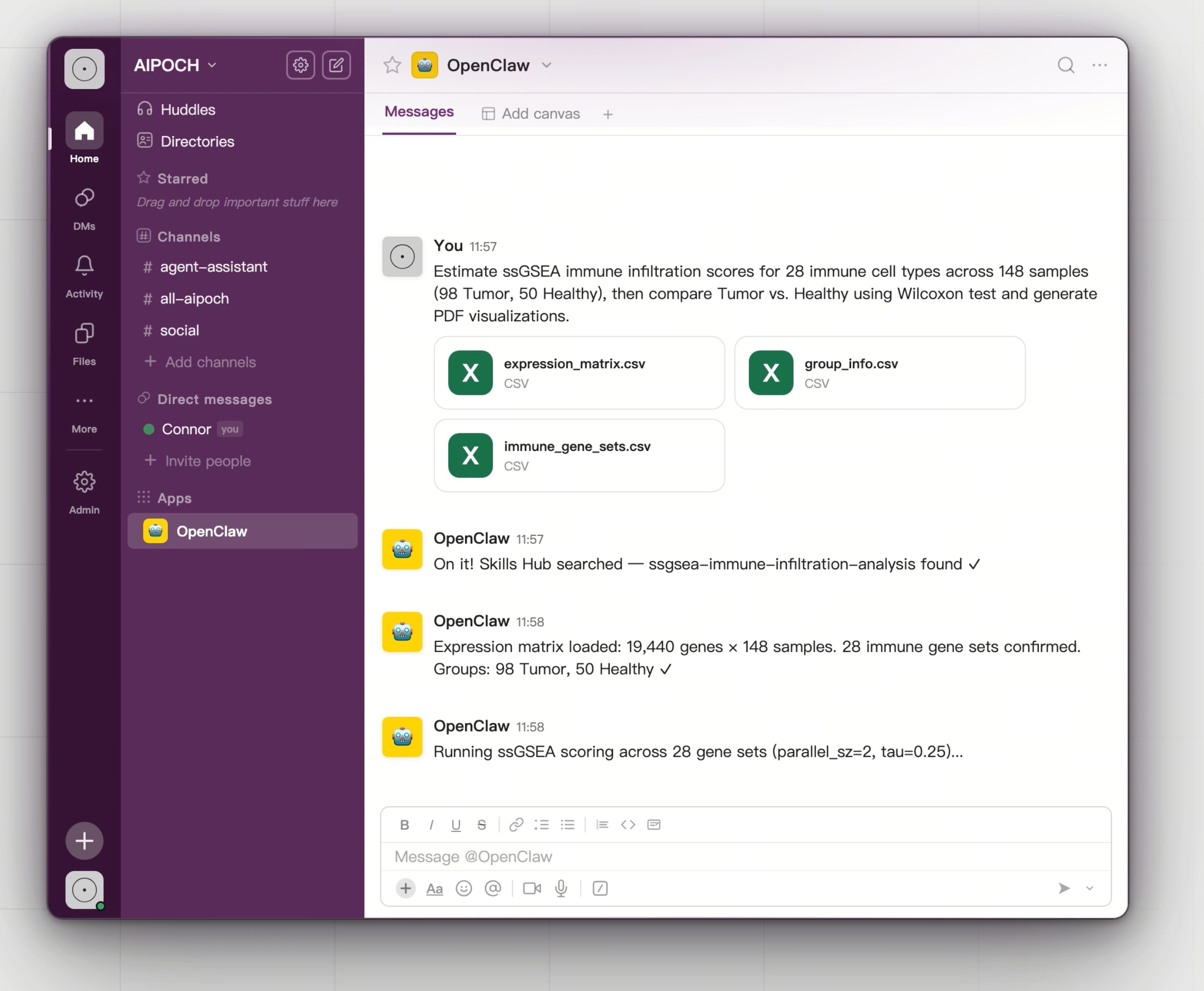
In the demonstrated example, the researcher uploaded:
- expression_matrix.csv
- group_info.csv
- immune_gene_sets.csv
The submitted request was:
Estimate ssGSEA immune infiltration scores for 28 immune cell types across 148 samples (98 Tumor, 50 Healthy), then compare Tumor vs. Healthy using Wilcoxon test and generate PDF visualizations.
After receiving the request, OpenClaw searched the AIPOCH Skills Hub and identified the ssGSEA Immune Infiltration Analysis skill as the appropriate workflow.
Step 2 — AI Workflow Execution
The skill validated the inputs, confirmed sample groups and immune signatures, and then performed ssGSEA scoring across all 28 immune-cell gene sets.
After scoring, the workflow conducted Tumor-versus-Healthy comparisons using the Wilcoxon test, applied FDR correction, and generated correlation analyses and visualization reports.
The analysis identified 22 significant immune-cell categories at FDR ≤ 0.05 for researcher review
Step 3 — Structured Outputs
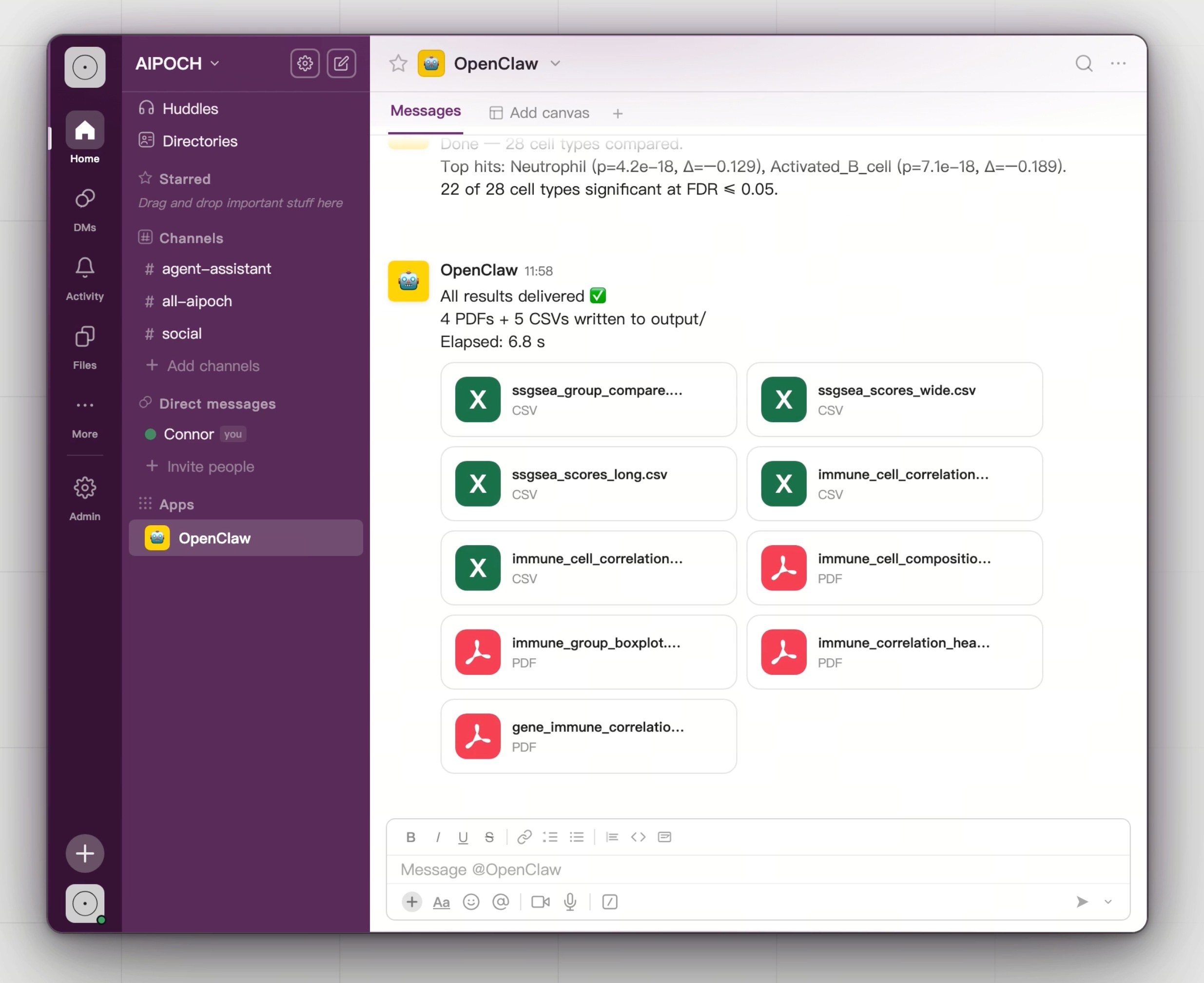
Generated CSV outputs included:
- immune_cell_correlation_pvalue.csv
- ssgsea_scores_wide.csv
- ssgsea_scores_long.csv
- ssgsea_group_compare.csv
- immune_cell_correlation_matrix.csv
Generated visualization files included:
- immune_cell_composition_sample.pdf
- immune_group_boxplot.pdf
- immune_correlation_heatmap.pdf
- gene_immune_correlation_scatter_ND4_Activated_dendritic_cell.pdf
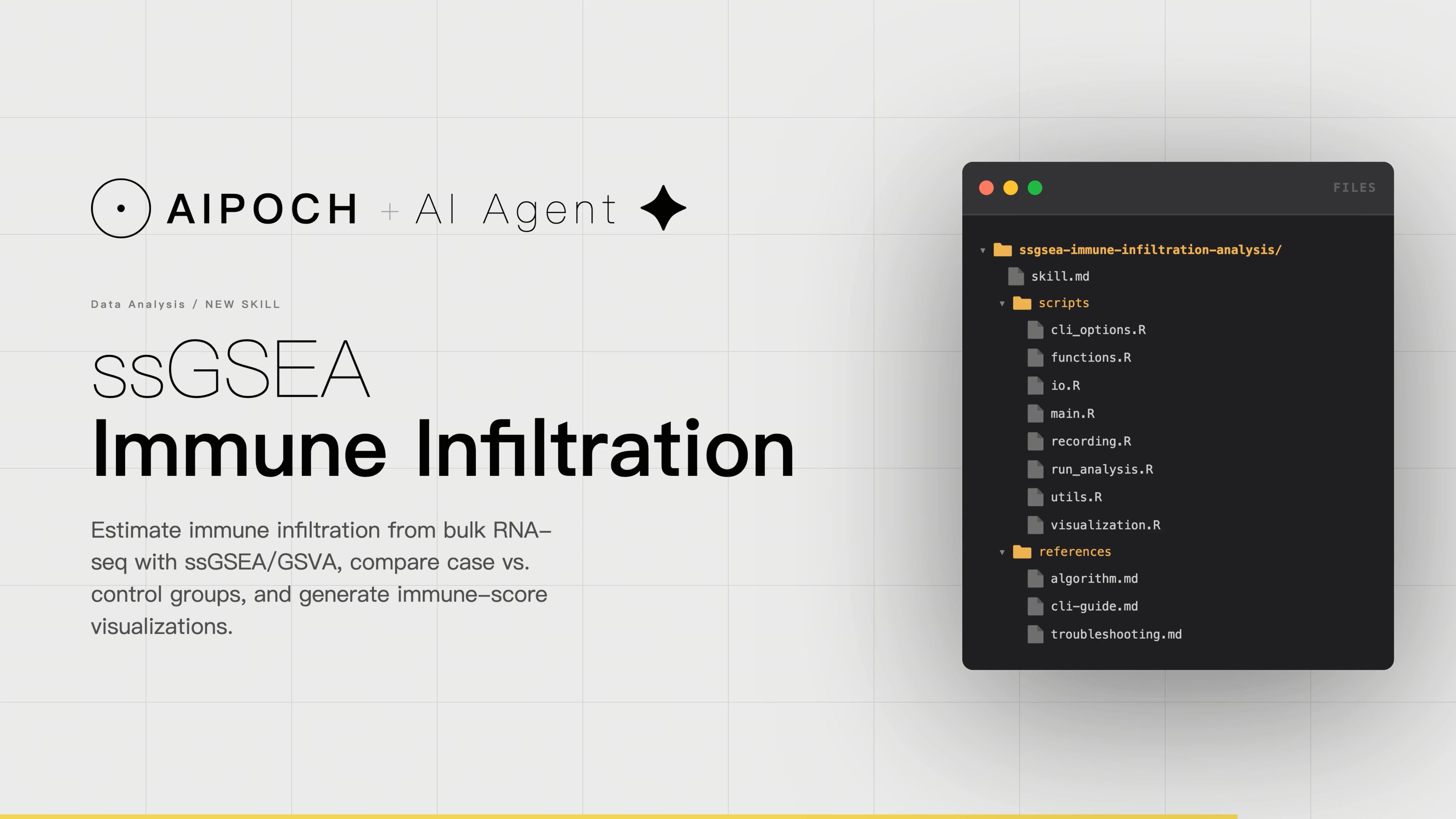
Demo Video: The short demonstration below walks through the same input-to-output workflow end to end:
Who Can Benefit From This Skill?
The ssGSEA Immune Infiltration skill can support biomedical researchers, bioinformaticians, computational biology teams, translational medicine groups, systematic review and reanalysis teams, and graduate students working with bulk RNA-seq expression matrices. It is most relevant to researchers who repeatedly score immune enrichment across datasets and need consistent, documented runs to review rather than one-off manual scripts.
Conclusion
The ssGSEA Immune Infiltration Analysis skill is designed to support bulk RNA-seq immune infiltration-related workflows by organizing immune-cell signature enrichment scoring, statistical comparison, correlation analysis, and visualization generation into a structured process.
Rather than replacing researcher judgment, the skill provides outputs that may help reduce repetitive preprocessing steps and improve workflow consistency. Researchers remain responsible for interpreting results, validating findings, and determining biological relevance.
AIPOCH is a collection of Medical Research Agent Skills created to support AI-assisted biomedical research workflows across literature review, evidence organization, bioinformatics preprocessing, data analysis support, and research writing tasks. Explore the full library on GitHub and at the AIPOCH skill library.
FAQ
What is ssGSEA immune infiltration analysis?
ssGSEA immune infiltration analysis is a signature-based approach that calculates the relative enrichment of immune-cell marker gene sets in each sample of a bulk RNA-seq dataset. These scores can be used to explore immune infiltration-related patterns and compare relative immune-cell signature activity across samples or study groups.
What input files does the ssGSEA Immune Infiltration skill need?
It needs three CSV or TSV files: an expression matrix, a group file mapping samples to study groups, and a gene set file.
What outputs are generated by the workflow?
The workflow generates score matrices, group-comparison tables, correlation analyses, and PDF visualizations. These outputs are provided for researcher review and downstream analysis.
Can the skill analyze single-cell RNA-seq data?
No. The ssGSEA Immune Infiltration skill is scoped to bulk RNA-seq expression matrices and explicitly does not support single-cell RNA-seq, spatial transcriptomics, or absolute cell-proportion deconvolution.
Related Articles
Interested in other immune-analysis workflows?
- How Can AI Agents Run Immune Pathway Analysis from Bulk RNA-seq Data?
- How Can AI Agents Perform CIBERSORT Immune Infiltration Analysis?
Disclaimer
This content is intended for informational purposes only and does not constitute medical advice, clinical guidance, diagnostic recommendations, treatment decisions, or validated scientific conclusions.
Any medical text, datasets, biomarkers, diseases, or analytical results discussed in this article are presented for demonstration purposes only.
References and external links are provided for informational purposes only. AIPOCH does not endorse and is not responsible for the content of third-party sources.